The car feels familiar, but the fuel receipt doesn't. You're stopping for gas sooner even though there is no shaking, hesitation, or warning light. Before blaming the engine, compare miles traveled with gallons added over several fill-ups; one tank and a changing dashboard estimate can be misleading.
Once the increase is consistent, look at what changed around the same time. A different commute, recent tire work, or an engine that takes longer to warm up can be more revealing than the absence of a check engine light.
1. Shorter Trips and More Idling Change the Average
A week of brief errands can use more fuel per mile than a longer highway commute. The engine repeatedly warms from cold, and time spent idling consumes fuel without adding distance. Waiting with the air conditioning running adds demand too.
Compare similar routes and operating conditions before deciding the car has developed a fault. Note remote-start use, school or appointment queues, and trips that end shortly after startup. It also establishes a useful baseline if consumption remains higher after the routine returns to normal.
2. Tire Pressure or Added Cargo Increases Resistance
Underinflated tires flex more as they roll, increasing resistance. The pressure drop can be gradual enough that steering still feels familiar. Carrying equipment that used to stay in the garage adds weight, while a roof rack or cargo box can increase aerodynamic drag even after the trip it was installed for has ended.
Set cold tire pressures to the vehicle label, not the maximum on the tire. At our shop, we also look for unusual tread wear and inappropriate tire fitment when fuel use changes after tire replacement. Heavier or different tires can affect consumption, but you should check fit and pressures before blaming the entire change on a brand or tread pattern.
3. The Engine Is Staying Cooler Than Intended
A thermostat that remains open can delay warm-up or let engine temperature fall during road driving. The cabin heater may feel weaker, but not enough for the driver to connect it to fuel use. An inaccurate temperature sensor can also lead the control system to operate from the wrong information about engine conditions.
A scan can compare reported temperature with the vehicle's actual warm-up behavior. The dashboard gauge isn't precise enough to settle every thermostat complaint. A new sensor won't correct an engine that is genuinely running too cool, and a new thermostat won't repair damaged wiring. The diagnosis needs to distinguish physical temperature from the computer's interpretation.
4. Fuel Control Is Compensating for Incorrect Information
Airflow and exhaust sensors help the engine computer adjust the mixture. A reading can become inaccurate or slow without immediately producing a warning. The car can still feel acceptable while fuel corrections change. A leaking injector or other fuel-control fault can also increase consumption before the driver notices an obvious miss.
Fuel-trim data, sensor response, and pressure checks help identify the cause. We look for agreement between readings rather than replace an oxygen sensor solely because mileage fell. A strong raw-fuel odor or visible fuel leak needs immediate attention. Don't keep measuring consumption while driving a vehicle that could be leaking fuel externally.
5. A Brake Does Not Release Completely
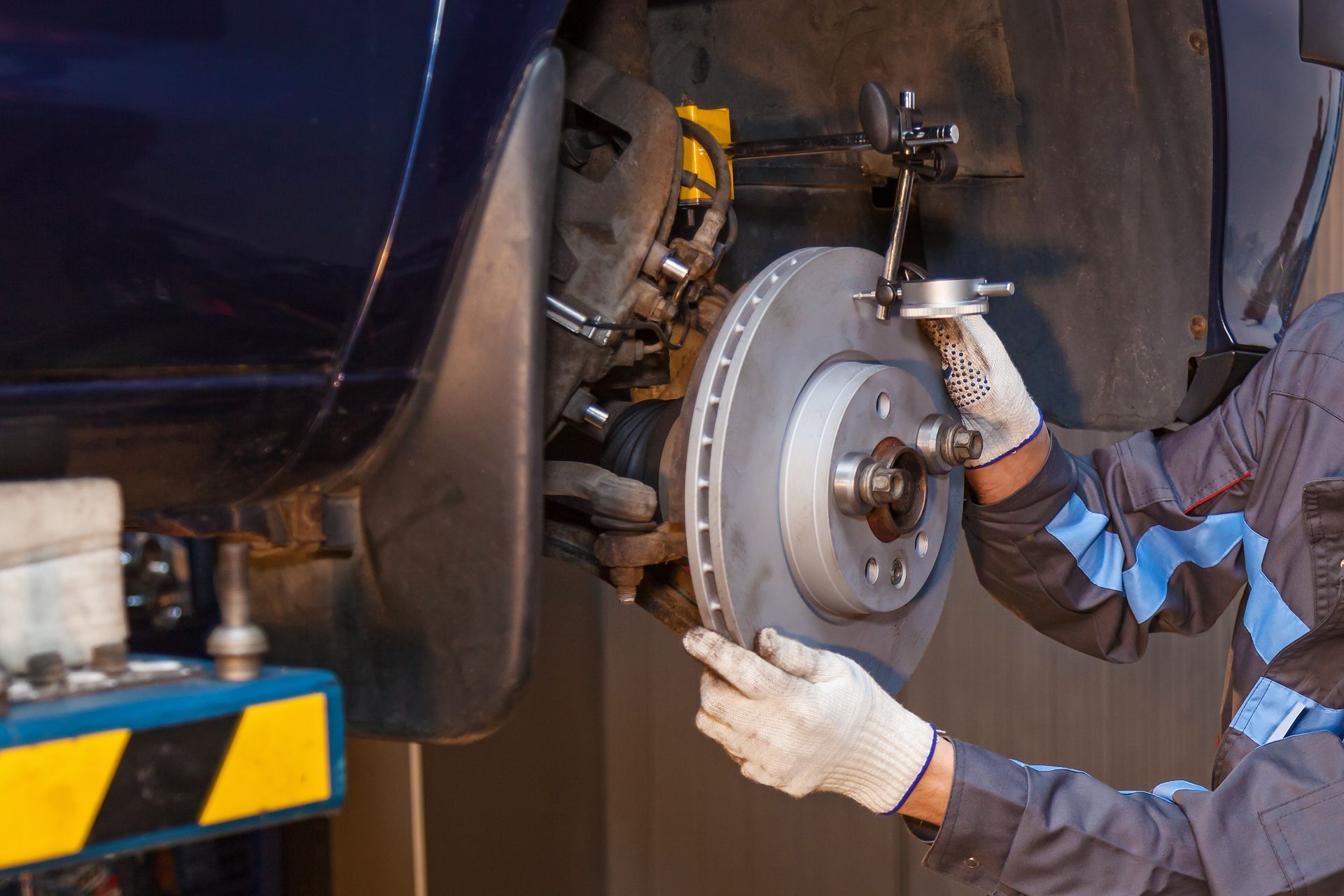
Light brake drag can make the engine work harder without creating an obvious pull. A sticking slide, caliper piston, parking-brake mechanism, or hydraulic release issue can leave friction at one wheel after you release the pedal. The extra load is present on every trip, so fuel use can rise before the brake complaint becomes unmistakable.
Reduced coasting distance, uneven brake dust, or an unusual hot smell can help guide the assessment. Measure wheel temperatures safely; don't check them by touching hot parts. A brake inspection needs to establish why the assembly is dragging. Replacing worn pads without restoring free movement leaves both the heating problem and extra resistance unresolved.
6. The Transmission Isn't Reaching Its Efficient Cruising State
Many conventional automatics use a torque-converter clutch to reduce slip during suitable cruising conditions. If it doesn't engage as intended, engine speed can remain higher than expected on a familiar road. A transmission that stays in a lower gear, an unintentionally selected drive mode, or a control fault can also increase fuel use.
Compare the operating mode and road conditions before assuming internal damage. Transmission data can show commanded gear and converter-clutch behavior. Keep fluid service and other regular maintenance current, but don't expect a fluid change to repair every control or clutch fault. A measured change in cruising behavior is more useful than replacing parts because the transmission has reached a certain mileage.
Get Fuel Economy Diagnostics In Naples, FL, With Clemente's Auto Care
Clemente's Auto Care in Naples, FL, can investigate a sustained increase in fuel use and compare it with driving conditions. Bring several fill-up records and details of recent changes to the car.