Brake noise is frustrating because it can show up out of nowhere, then disappear just as fast. Some sounds are harmless and tied to conditions, while others are an early warning that something is wearing down faster than you think. The tricky part is that your ears may be catching the only clue you get before the braking feel changes.
If you want to handle it the smart way, start by figuring out what kind of noise you have and when it happens. That timing often points you toward the real cause without guessing or throwing parts at it. A little pattern spotting goes a long way here.
Here’s how technicians usually sort squeals from grinds and decide what to check first.
Why Brakes Make Noise At All
Brakes are basically friction on purpose, so some sound is normal now and then. Pads press against rotors, and any vibration in that contact can turn into noise, especially when parts are cold or slightly damp. Even a thin layer of surface rust on the rotors can create a brief scrape at the first stop of the day.
Noise also depends on how the pad material interacts with the rotor surface. Some pad compounds are quieter than others, and some are more sensitive to temperature changes or light braking. If the sound changes based on weather, first stop, or how hard you brake, that detail matters.
Squeal Vs. Grind: The Quick Difference
Squealing is usually a high-pitched sound, and it often shows up with light braking. It can happen when pads vibrate, when a wear indicator is just starting to contact, or when a thin film of moisture or road grime is on the rotor. You might notice it more at low speeds in parking lots because the sound has time to echo.
Grinding is a lower, harsher sound that tends to repeat with wheel rotation. That noise often means the pad material is worn down enough that metal parts are contacting the rotor. If you hear grinding, you should treat it as time-sensitive because the repair can get more expensive quickly once rotors are chewed up.
Common Causes Of Brake Squeal
One common cause is a light glaze on the pad surface from lots of gentle stops or repeated heat cycles. Another is a lack of lubrication at pad contact points, which allows small vibrations to turn into noise. Dust can also play a role, since some pad materials create fine dust that builds up and changes how the pad meets the rotor.
Here are a few squeal triggers we see most often during an inspection:
- Worn pads that are near the wear indicator
- Pads installed without proper hardware support or shims
- Rotors with minor surface rust after sitting
- Caliper slide pins that are dry or sticking
If the brakes feel normal and the noise is light and inconsistent, it may be something simple. Still, it is worth checking sooner rather than later because squeal can be the earliest sign of uneven wear. Regular maintenance helps a lot here, since cleaning and lubrication keep the hardware doing its job.
When Grinding Usually Means Stop Driving
Grinding tends to show up when the pad's friction layer is gone or very close to gone. At that point, the backing plate or wear hardware can cut into the rotor, leaving deep grooves. The car may still stop, but stopping distances can increase and the pedal may feel different as the rotor surface gets damaged.
Another scenario is a seized caliper or a stuck slide pin that keeps one pad dragging. That can create heat, a burning smell, and a grinding or scraping sound that gets worse the longer you drive. We’ve seen cases where one wheel is doing most of the work, which wears one side fast and makes noise before the driver feels a pull.
What We Check When Brakes Get Noisy
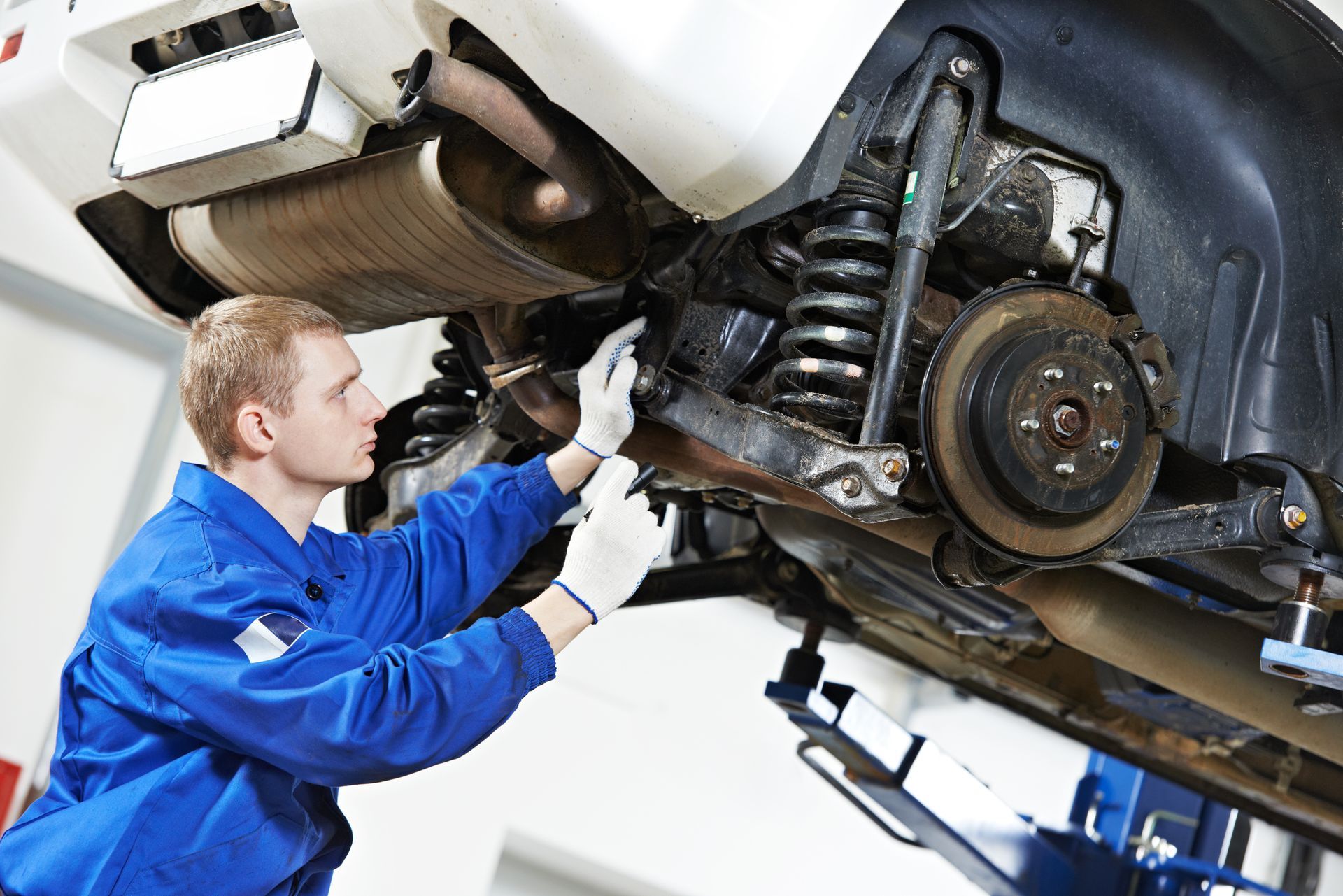
A proper check is more than peeking through the wheel spokes. We look at pad thickness, rotor condition, and whether wear is even side-to-side on the same axle. We also check caliper slide movement, hardware condition, and whether anything is loose or rubbing where it should not be.
We pay close attention to patterns because they tell the story. Inside pad worn more than outside can point to slide issues, and a rotor with a shiny ring can point to a pad that is not contacting evenly. Our technicians also look for fluid leaks around the caliper, since that can change braking behavior and lead to uneven wear.
How To Keep Brake Noise From Coming Back
Choosing the right parts matters, but so does how they are installed. Quality hardware, correct lubrication points, and properly serviced caliper slides make a huge difference in noise and pad life. Bedding in new pads the right way also helps the pad material transfer evenly to the rotor surface, which reduces squeal later.
Driving habits play a role too, especially constant light braking that never fully cleans the rotor surface. If your vehicle sits a lot, expect occasional rust noise on the first stop, and focus on whether it clears quickly. If you want fewer surprises, plan a quick brake check at least once a year or when tires are rotated, since that is a natural time to look everything over.
Get Brake Repair In Naples, FL, With Clemente's Auto Care
If your brakes are squealing or grinding, Clemente's Auto Care can pinpoint what’s causing it and recommend the right fix before wear turns into rotor damage.
Book a visit when it fits your schedule.